
Few product elements influence consumer perception as quietly yet powerfully as fragrance. A well-crafted scent can evoke nostalgia, signal freshness, or create a sense of comfort—often becoming the defining factor that transforms an ordinary product into an experience consumers remember.
For brands, this strong emotional connection makes fragrance one of the most powerful tools in shaping the consumer journey. Choosing the right fragrance partner is a vital decision; a great supplier’s expertise determines whether a product merely “smells good” or truly resonates with the market.
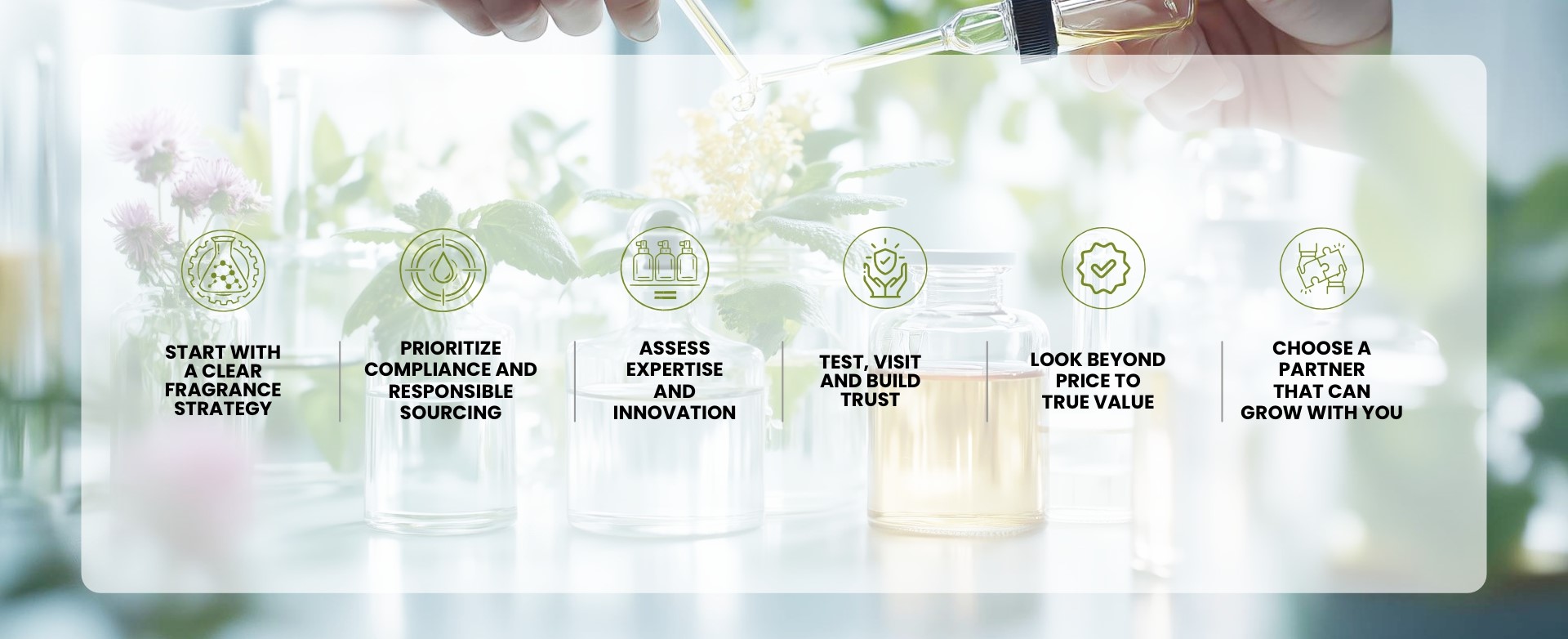
Here is a practical, six-step framework to help your brand identify the right fragrance supplier.
- Start with a Clear Fragrance Strategy
Before approaching suppliers, you must define the specific role fragrance will play in your product. Different categories require vastly different fragrance profiles and technical performance:
- Detergents & Fabric Care: Rely on bright citrus, aqua, or green notes to communicate freshness and long-lasting cleanliness.
- Soaps & Personal Care: Benefit from comforting florals or woody bases (jasmine, sandalwood, rose, or musk) that elevate daily rituals.
- Agarbatti& Home Fragrance: Demand deeper, lingering notes (sandalwood, oud, or patchouli) to create a specific atmosphere.
- Food-Adjacent/Ambient Categories: Favour warm, appetitive profiles like vanilla, coffee, cinnamon, or cardamom.
Key Action: Gain clarity on your fragrance direction, performance expectations, and production scale first. This makes it easier to identify suppliers capable of delivering those specific outcomes.
- Prioritize Compliance and Responsible Sourcing
Quality and safety are non-negotiable. Before evaluating creative strengths, ensure suppliers meet essential regulatory standards:
- Recognized Benchmarks: Look for compliance with IFRA guidelines, ISO certifications, and GMP practices.
- Documentation: Ensure they provide all necessary regulatory documentation to guarantee fragrances are safe and consistent.
- Transparency: Modern consumers value ethics. Suppliers that prioritize ethically sourced ingredients and sustainable practices offer stronger long-term credibility.
- Assess Expertise and Innovation
Every fragrance house has a distinct “specialty.” Some excel in fine fragrances, while others specialize in functional scents for industrial products.
- Category Alignment: Does their portfolio match your product type?
- Technical Capability: Evaluate their R&D depth, application expertise, and innovation in development.
- The Human Factor: A critical but underrated factor is the team. The perfumers, chemists, and technical specialists behind the company often make the difference between a standard product and a standout one.
- Resilience: In a world of global disruptions, assess their manufacturing efficiency and supply chain stability.
- Test, Visit, and Build Trust
A brochure can only tell you so much. Once you have a shortlist, move toward hands-on evaluation:
- In-Product Testing: Test fragrances within your actual product formulations to see how they perform.
- Site Visits: Visit manufacturing facilities to witness their standards firsthand.
- Collaboration Over Transaction: The best suppliers act as collaborators rather than vendors. Look for transparency, ownership of the final product, and a willingness to solve challenges alongside your team.
- Look Beyond Price to True Value
While budget is always a factor, cost should be assessed in terms of overall value.
- Performance vs. Price: Premium suppliers may command higher prices, but they often offer superior ingredients and better formulation performance, leading to higher consumer preference.
- Hidden Costs: Don’t forget to factor in logistics, shipping, customs duties, and lead times—especially when dealing with international partners.
- Choose a Partner That Can Grow With You
Finally, ensure your partner is equipped for the future. As your brand scales, your supplier must be able to:
- Maintain consistent quality at higher volumes.
- Increase production capacity seamlessly.
- Support new product development through strong R&D, helping you explore new market opportunities.
The Bottom Line: The right fragrance partner doesn’t just deliver a scent; they help you create an experience that consumers trust and return to again and again.
References
- JKA Romatics. (2025, November 13). How to choose the right fragrance manufacturer in India: 5 key questions to ask.https://www.jkaromatics.com/blog/how-to-choose-the-right-fragrance-manufacturer-in-india-5-key-questions-to-ask-12
- NBinno. (2025, August 10). Navigating the fragrance market: Finding quality suppliers for aroma oils.https://www.nbinno.com/article/daily-chemical-fragrances/navigating-the-fragrance-market-finding-quality-suppliers-for-aroma-oil
- Chemical Bull. (n.d.). How to choose the right fragrance chemical supplier for your brand.https://www.chemicalbull.com/blogs/how-to-choose-the-right-fragrance-chemical-supplier-for-your-brand
- London Musk. (n.d.). Why choosing the right perfume supplier can make or break your brand.https://londonmusk.com/blogs/all/why-choosing-the-right-perfume-supplier-can-make-or-break-your-brand
- New Barouliya. (2025, August 22). How to choose the right industrial fragrance manufacturer for your business.https://newbarouliya.com/2025/08/22/how-to-choose-the-right-industrial-fragrance-manufacturer-for-your-business/
- Naturo and Orgo. (2026, February 16). How to choose the right perfume manufacturer: Key factors for quality success.https://naturoandorgo.com/how-to-choose-the-right-perfume-manufacturer-key-factors-for-quality-success/